Release
Create the psychological safety to name what is real and let go of what no longer serves the work.
The Sophia Network approach
The business paradigm has shifted. Culture, technology, strategy, and people now change together, so linear solutions to isolated problems are no longer enough. The Innovation Ecosystem approach works with those connections to build lasting capability.
Wisdom is the ability to contemplate and act using knowledge, experience, understanding, common sense and insight. Our Innovation Ecosystem methodology combines ancient wisdom about human collaboration with cutting-edge science about organizational change.
The 2025 Nobel Prize in Economics recognised research explaining innovation-driven economic growth: sustained growth depends on technological progress and the continual development of new technologies that replace older ones. This research aligns with our focus on building a self-generating capacity for innovation. Our methodology builds this capability within organizations.
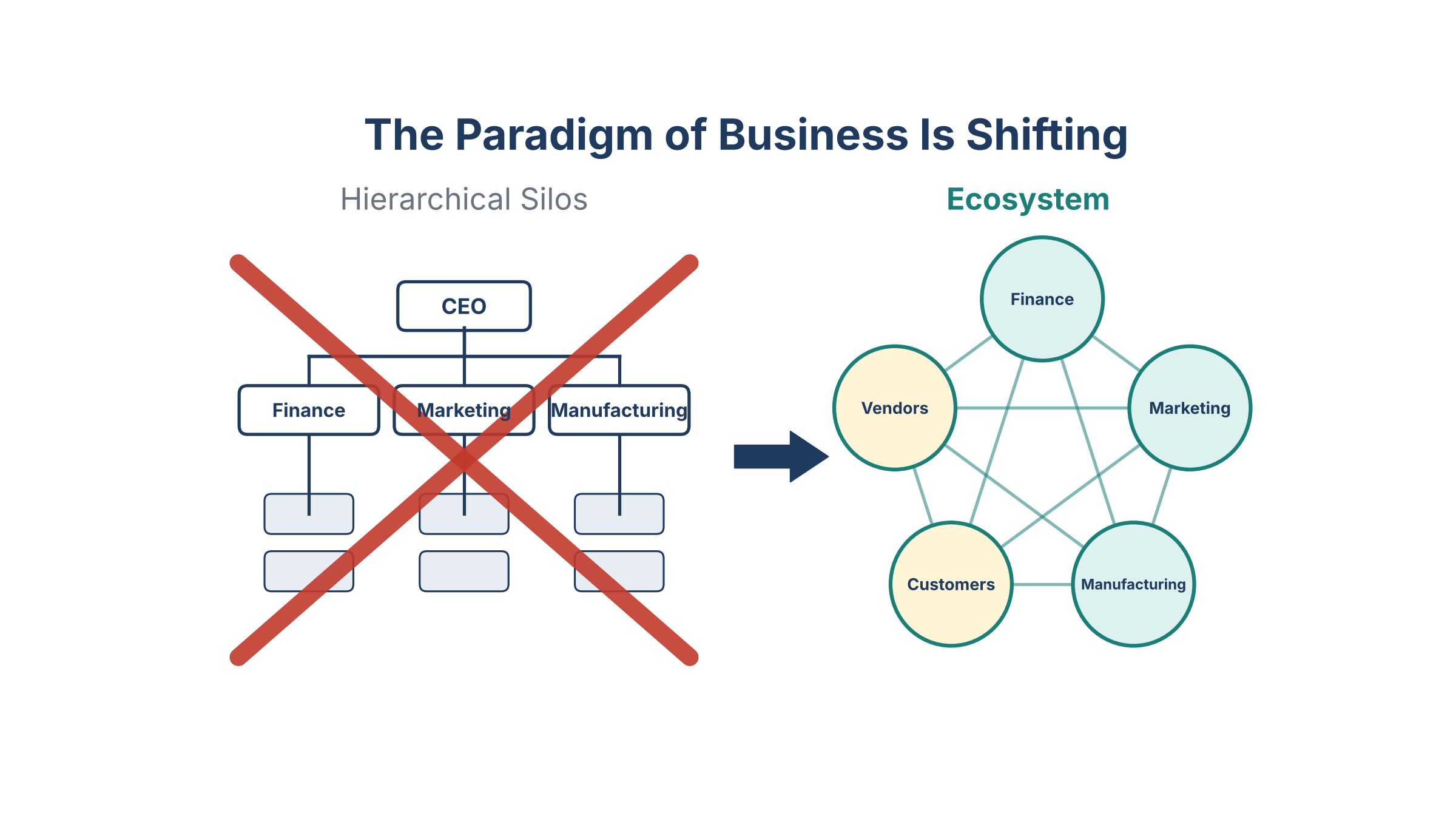
Isolated silos
Separate decisions. Unseen consequences.
An innovation ecosystem
Shared understanding. Connected action.
Aligned teams prototype projects and strategies, gather stakeholder feedback, and iterate again and again. This process shortens cycle time.
Three integrated components
Work with the relationships, mental models, and reinforcing feedback loops shaping the whole organization.
Deep listening creates the psychological safety people need to participate fully and speak openly.
Rapid prototyping and continuous stakeholder feedback make learning part of execution.
Seventy percent of all organizational change initiatives fail because of employee resistance, and resistance takes root where psychological safety is missing.
Psychological safety is created through deep listening. Deep listening is not active listening or empathetic nodding. It is the disciplined practice of listening from a clean canvas: letting your internal judgments and evaluations go so you can remain fully present with another person.
When people are fully heard, they release the upset that gets expressed as resistance and become genuine participants in transformation rather than passive recipients of it. Deep listening is the antidote to resistance.
The seven-phase method
These phases are a living, non-linear system. Teams return to the work as conditions, people, and challenges change.
Create the psychological safety to name what is real and let go of what no longer serves the work.
Build shared purpose around the challenge, the opportunity, and the conditions for action.
Set up the roles, capacity, teams, sponsorship, and rhythms that make change possible.
Make ideas tangible, test assumptions quickly, and learn with stakeholders rather than around them.
Turn stakeholders into co-creators by inviting them into the emerging work and its decisions.
Run disciplined feedback loops that strengthen both the work and the organisation’s capacity to learn.
Acknowledge contributions, learn from the work, and celebrate progress so one project creates the conditions for the next breakthrough.
What changes